
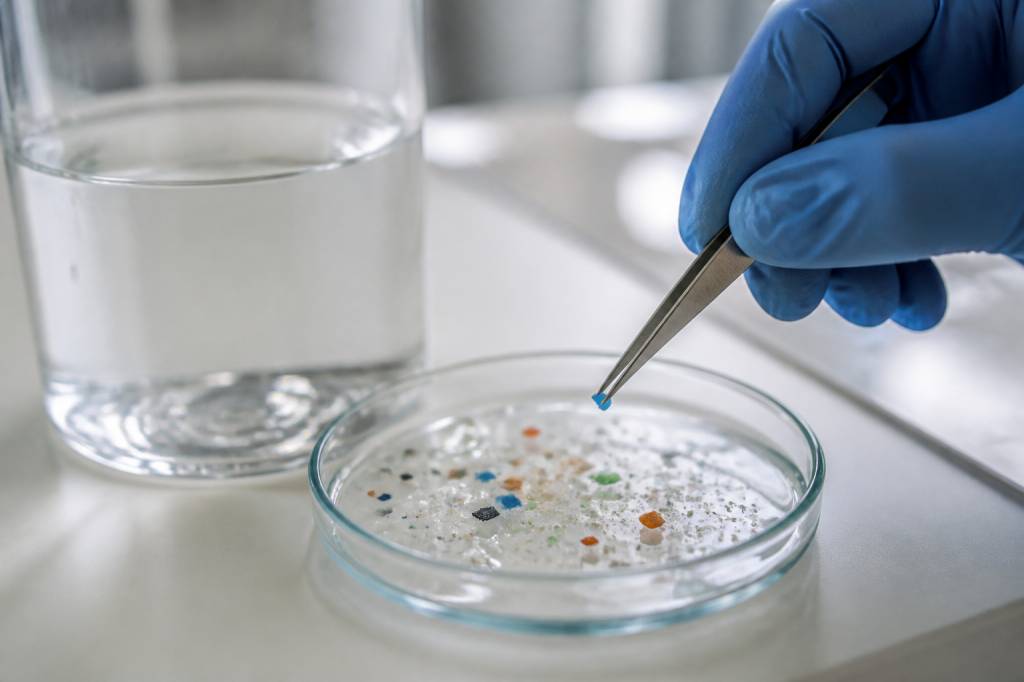
Microplastics in Drinking Water: Why This Emerging Issue Matters
Microplastics in drinking water have moved from a niche environmental concern to a mainstream water quality topic. They are now discussed by researchers, utilities, regulators, and consumers who want to understand what is flowing through their taps. The reason is simple. Microplastics are widespread, difficult to remove completely, and present in sources ranging from rivers and reservoirs to groundwater and bottled water.
These particles are typically defined as plastic fragments, fibers, beads, or films smaller than 5 millimeters. Many are far smaller than that. Some are visible to the naked eye. Others require advanced microscopy or spectroscopy to detect. This range in size makes microplastics especially challenging for drinking water treatment and for long-term monitoring programs.
Interest in this issue has grown because water systems are under pressure from multiple directions. Aging infrastructure, increasing stormwater runoff, wastewater discharges, and urban pollution can all contribute to contamination pathways. At the same time, consumers are asking whether their drinking water is safe, how to reduce exposure, and which water filtration technologies can help.
How Microplastics Enter Drinking Water Supplies
Microplastics can enter the water cycle at many points. They originate from the breakdown of larger plastic waste, synthetic textiles, tire wear, industrial materials, packaging, personal care products, and wastewater sludge. Once they are in the environment, they can be transported over long distances and accumulate in surface water and sediment.
Municipal drinking water systems may draw from surface water, groundwater, or blended sources. Surface water is often more exposed to airborne deposition, runoff, and upstream pollution. Groundwater is not immune either, especially where infiltration pathways, land use pressures, or poorly protected aquifers are involved.
Wastewater treatment plants are important control points, but they are not perfect barriers. They can remove a substantial share of microplastics, yet some particles still pass through treated effluent. Others end up in biosolids that may later be applied to land, creating another pathway back into the water environment. The result is a complex cycle. It is not easy to break.
What Research Says About Health Risks from Microplastics
The question most people ask is direct: are microplastics in drinking water harmful? Research is still developing, and many uncertainties remain. Scientists continue to study exposure levels, particle behavior, and the biological effects of different sizes, shapes, and polymer types.
Current evidence suggests that the greatest concern may come from a combination of physical and chemical factors. On the physical side, very small particles may interact with tissues in ways that larger particles cannot. On the chemical side, microplastics may carry additives, adsorbed pollutants, or microbial communities that could influence health outcomes.
Potential health risks being studied include inflammation, oxidative stress, immune response changes, and possible impacts on the gut. Laboratory studies have also explored whether nanoplastics, which are even smaller than microplastics, can cross biological barriers more easily. These findings are important, but they do not mean that every detected particle in drinking water poses the same risk. Dose, exposure route, particle type, and individual vulnerability all matter.
It is also important to keep perspective. The science does not yet provide a simple, universal risk threshold for microplastics in drinking water. That uncertainty is one reason why water quality standards, monitoring protocols, and treatment strategies are evolving. Regulators generally prefer robust evidence before setting strict limits, and that evidence is still being built.
Why Detection and Monitoring Are So Challenging
Microplastics monitoring is technically demanding. Water samples often contain natural organic matter, mineral particles, fibers, and other debris that can interfere with analysis. Identifying plastics accurately usually requires careful sample preparation followed by tools such as Fourier-transform infrared spectroscopy, Raman spectroscopy, or thermal analysis methods.
There is also no single global standard for measuring microplastics in drinking water. Different studies use different sampling volumes, filtration sizes, and identification criteria. As a result, comparing results across regions or over time can be difficult. One laboratory may report particle counts differently from another. That complicates public communication and policy planning.
For utilities and researchers, consistent monitoring is becoming more important. Baseline data helps determine whether a water source is improving, stable, or under increasing pressure. It also supports decisions about treatment upgrades, source protection, and risk communication. Without reliable data, it is hard to know which interventions offer the greatest benefit.
Technologies Shaping Safer Water Systems
As concern over microplastics grows, water treatment technologies are receiving more attention. Some systems are already effective at reducing particle loads. Others are being refined for higher efficiency, lower waste, and better performance across a wider range of particle sizes.
Key technologies used in microplastics removal include:
Among these, membrane technologies have attracted significant interest. Ultrafiltration and reverse osmosis can be highly effective, especially for advanced treatment applications. They are not universal solutions, though. They require careful design, regular maintenance, and an understanding of concentrate disposal or backwash management. In other words, they solve one problem while creating operational questions that must be managed responsibly.
Point-of-use water filters are also drawing consumer interest. Under-sink reverse osmosis systems, certified faucet filters, and select pitcher filters may help reduce microplastic exposure at the household level. Performance varies widely, however. Certification, filter pore size, flow rate, and replacement schedule all matter. A product that claims broad contaminant reduction should be evaluated against credible standards.
The Role of Wastewater Treatment and Source Protection
Drinking water safety does not start at the tap. It starts much earlier, at the source. Protecting source waters is one of the most effective strategies for reducing microplastic contamination across the entire water system.
Upgrading wastewater treatment can make a meaningful difference. Advanced treatment stages, improved solids handling, and better capture of synthetic fibers can reduce the release of particles into rivers and coastal waters. Stormwater controls are also important. Runoff from roads, industrial zones, and densely built areas can transport plastic debris into waterways after heavy rain.
Source protection can include watershed management, better solid waste collection, restrictions on certain plastic releases, and public infrastructure improvements. These measures are not as visible as a new filter installation, but they can have a broad and lasting impact. Prevention is usually cheaper than removal.
How Water Utilities Are Responding to Microplastic Concerns
Many water utilities are taking a careful, evidence-based approach. They are reviewing treatment performance, evaluating particle removal data, and exploring whether existing processes already provide substantial protection. In many cases, conventional treatment performs better than people expect. That said, performance depends on water quality, process control, and plant design.
Utilities are also looking at optimization rather than replacement. Small changes in coagulant dosing, filtration media, backwash frequency, or membrane operation can improve particle removal. Upgrades may be phased in over time, especially where budgets are limited.
Communication is another priority. Consumers want to know whether their water meets safety expectations and whether microplastics require immediate action. Clear public messaging helps explain what is known, what remains uncertain, and how treatment investments are being prioritized. Transparency builds trust. Silence often does the opposite.
What Consumers Can Do to Reduce Exposure
For households, practical steps are available. The best choice depends on the source water, the home plumbing setup, and the level of protection desired. A well-selected filtration device may reduce microplastic particles at the point of use. Maintenance matters just as much as technology.
Useful consumer actions include:
Consumers who are shopping for safer water products should look closely at specifications. Pore size, certification standards, contaminant reduction claims, and maintenance requirements all influence real-world performance. A product with strong marketing language is not automatically a strong performer.
The Future of Microplastics Control in Drinking Water Systems
The future of microplastics management will likely combine better science, better treatment, and better prevention. Researchers are working to refine detection methods so that data becomes more comparable and easier to interpret. Regulators are studying whether health-based guidance values or monitoring frameworks are needed. Manufacturers are developing more efficient filtration media and membrane systems.
At the same time, plastic pollution prevention is gaining momentum. Reducing plastic leakage at the source can ease pressure on every downstream water system. That is especially important because no treatment train is infinitely capable, and no utility can filter its way out of every environmental contamination problem.
What emerges from this landscape is a layered strategy. Source protection, wastewater controls, advanced treatment, and consumer filtration each play a role. None is sufficient alone. Together, they can create safer water systems that are more resilient, more transparent, and better prepared for future contamination challenges.
Why This Topic Will Keep Growing
Microplastics in drinking water are unlikely to remain a short-term news cycle. The issue sits at the intersection of public health, environmental protection, infrastructure investment, and consumer behavior. That combination makes it highly relevant for utilities, policymakers, and households alike.
As research advances, expectations will rise. People will want more precise information about exposure, better treatment options, and clearer product labeling for household filters. The water sector is responding, but the pace of change must match public concern and scientific progress.
For anyone following water technology trends, this is an area worth watching closely. It affects how drinking water is monitored, how treatment plants are designed, and how consumers choose products for their homes. The story is still unfolding. The technical and health questions are significant, and the solutions are becoming more sophisticated every year.