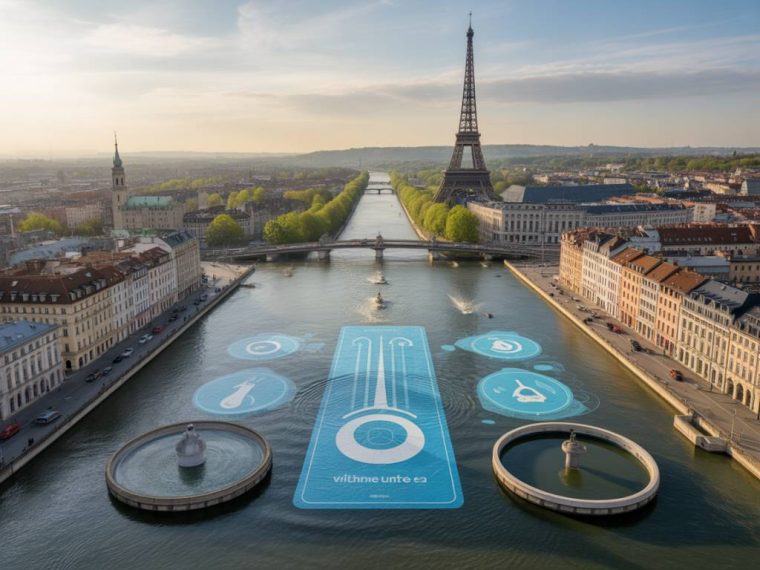
Internet of Things and Smart Water Management in Modern Cities
The Internet of Things (IoT) is reshaping how cities manage water. Sensors, connected devices, and real-time data platforms are turning traditional water networks into intelligent systems. These smart water infrastructures help cities anticipate shortages, reduce leaks, and protect citizens from sanitary risks.
For municipalities facing climate change, rapid urbanization, and aging infrastructure, the stakes are high. Smart cities must guarantee water security and public health while controlling costs. IoT water technologies are becoming a central pillar of this transformation, providing continuous visibility into the urban water cycle: from drinking water production to distribution, consumption, wastewater and reuse.
How the Internet of Things Transforms Urban Water Infrastructure
Historically, water networks have operated with limited data. Utilities relied on manual meter readings, periodic sampling, and physical inspections. Problems were often discovered late, when leaks had already wasted millions of liters of water or when contamination had already affected consumers.
With IoT, this paradigm changes. Connected water infrastructure is built on three key layers:
- Smart IoT sensors installed on pipes, pumps, reservoirs, meters, and treatment plants
- Connectivity networks using LPWAN, LTE, 5G, or fiber to transmit data in real time or near real time
- Data platforms and analytics that aggregate, visualize, and analyze data to support operational decisions
This combination allows utilities to monitor flow, pressure, temperature, water quality parameters, and equipment status continuously. Issues that once took days or weeks to detect can now be identified and addressed in minutes.
Smart Cities and Crisis Prevention: From Reactive to Predictive Water Management
One of the most powerful benefits of IoT in water management is the shift from reactive to predictive operations. Smart cities can use real-time data and AI models to foresee risks and mitigate them before they escalate into crises, whether they are hydric (water scarcity, flooding) or sanitary (contamination, disease outbreaks).
Predictive water management in a smart city typically focuses on three critical domains:
- Water availability and balance between demand and supply
- Network integrity and leakage management
- Water quality and sanitary safety throughout the urban water cycle
Each of these domains can benefit significantly from IoT sensors, data analytics, and automated control systems.
Smart Water Networks and Leakage Detection with IoT
Non-revenue water, largely caused by leaks and unauthorized consumption, remains one of the biggest challenges for water utilities. In many cities, 20% to 40% of treated drinking water never reaches end users. This is a hidden but massive source of waste, financial loss, and vulnerability to water crises.
IoT-based smart water networks tackle this problem in multiple ways:
- Pressure and flow sensors distributed across the network detect anomalies that indicate leaks, bursts, or illegal connections.
- Acoustic leak detection devices listen for the characteristic sound patterns of water escaping under pressure.
- Smart water meters at the consumer level report consumption in real time, enabling rapid detection of abnormal usage.
Data from these devices feed into analytics platforms that perform leak localization and prioritization. Advanced algorithms can compare the expected hydraulic behavior of the network with the observed data, identifying suspicious zones. Instead of waiting for visible pipe bursts, maintenance teams receive targeted alerts, allowing precise and faster interventions.
This approach is not only technical. It is also strategic for cities facing increasing water scarcity. Reducing losses by just a few percentage points can free up significant volumes of water, delaying or even avoiding the need for new and costly supply infrastructure. In this sense, IoT-driven leak detection is a direct lever for preventing hydric crises.
IoT Sensors for Water Quality Monitoring and Public Health Protection
Water quality monitoring has traditionally relied on laboratory analyses, often with delays between sampling and results. While this remains essential for regulatory compliance, it is not sufficient to detect sudden contamination events or dynamic changes in distribution networks.
IoT water quality sensors fill this gap by providing continuous in-situ measurements of key parameters:
- Physical parameters such as temperature, turbidity, and conductivity
- Chemical parameters such as pH, chlorine residual, dissolved oxygen, nitrates, or heavy metals (depending on sensor types)
- Biological indicators, through emerging sensor technologies and connected samplers aimed at detecting pathogens, algae, or biofilms
By combining these measurements with hydraulic data and network models, smart cities can build early warning systems for sanitary risks. For example, a sudden drop in chlorine residual accompanied by changes in flow can indicate infiltration of contaminated water into the network. Rapid alerts enable operators to redirect flows, isolate sections, and inform the population if necessary.
Beyond drinking water, IoT is increasingly used in wastewater and stormwater networks. Combined sewer overflows, which discharge untreated wastewater into rivers during heavy rainfall, are a major environmental and sanitary challenge. Level sensors, rain gauges, and flow meters make it possible to anticipate overloads, control retention basins, and optimize pumping operations. This integrated approach supports cities in protecting water bodies and limiting the spread of pathogens during flood events.
Smart Buildings, Legionella Prevention, and Indoor Water Safety
In smart cities, the focus is not limited to municipal networks. Buildings themselves are evolving into connected water ecosystems. Large public facilities, hospitals, hotels, and offices face their own sanitary risks, especially regarding Legionella bacteria, which proliferate in hot water systems and cooling towers.
IoT plays a growing role in building water safety management:
- Temperature and flow sensors monitor conditions favorable to Legionella growth in pipes, tanks, and showers.
- Automated flushing systems are triggered based on usage data to avoid stagnation in low-use branches.
- Connected controllers adjust disinfection processes, such as thermal or chemical treatments, according to real-time conditions.
These capabilities support compliance with regulations and recommendations, while reducing manual checks and paper-based audits. For facility managers, they also offer improved traceability: all events and actions are logged and can be analyzed later. In a broader smart city strategy, building-level IoT data can even be aggregated to contribute to citywide risk models during heatwaves or epidemics.
Digital Twins, AI, and Predictive Maintenance in Water Utilities
Beyond individual sensors, the most advanced smart cities are building digital twins of their water infrastructure. A digital twin is a dynamic, data-driven virtual replica of the physical system. It integrates hydraulic models, GIS data, real-time sensor streams, and operational rules.
When combined with AI and machine learning, these digital twins support predictive maintenance and scenario planning:
- By observing vibration, energy consumption, and pressure data, algorithms can forecast pump failures or valve degradation.
- By correlating weather forecasts, consumption patterns, and reservoir levels, utilities can optimize storage and pumping schedules to avoid shortages.
- By simulating pipe ruptures, contamination events, or power outages, operators can test and refine emergency response plans without impacting real operations.
This analytical layer is critical for crisis prevention. Instead of relying solely on experience and static plans, utilities can base their decisions on constantly updated models. They gain a better understanding of the vulnerabilities of their systems and can prioritize investments accordingly.
Data Governance, Cybersecurity, and Trust in IoT Water Systems
The expansion of IoT in water management introduces new challenges that cities cannot ignore. Connecting thousands of devices and centralizing sensitive data raises questions about cybersecurity, privacy, and governance. A smart water network that is not secure can itself become a source of risk.
Robust IoT water strategies therefore include:
- Secure communication protocols and encryption for data in transit and at rest
- Strong identity management for devices, users, and applications
- Network segmentation to isolate critical control systems from public or less secure networks
- Clear data policies defining how operational data, consumer data, and environmental data are used and shared
Citizen trust is also a decisive factor. When implementing smart meters or real-time monitoring, many cities face questions from residents about surveillance, billing fairness, and data use. Transparent communication, opt-in options for certain services, and tangible benefits for consumers (leak alerts at home, detailed consumption dashboards, personalized recommendations) help create acceptance and long-term engagement.
Emerging IoT Water Technologies and Market Opportunities
The IoT water sector is evolving rapidly. New generations of low-power sensors, edge computing devices, and AI-powered analytics platforms are expanding the possibilities for smart cities. For companies and innovators, the market is dynamic and diverse, ranging from hardware to software and integrated services.
Among emerging trends and technologies, several stand out:
- Energy-harvesting sensors that operate without batteries, powered by flow, vibration, or solar energy.
- Advanced biosensors and microfluidic devices capable of detecting specific pathogens, toxins, or micropollutants in real time.
- Edge analytics gateways that process data locally to reduce latency and bandwidth usage.
- Interoperable platforms and open standards simplifying integration between different IoT devices, SCADA systems, and city data hubs.
For buyers and decision-makers, this diversity can be both an opportunity and a challenge. Evaluating IoT water solutions requires a clear understanding of use cases, scalability, total cost of ownership, and integration with existing infrastructure. Vendors that can demonstrate measurable impacts on water savings, energy consumption, operational efficiency, and sanitary risk reduction will have a strategic advantage.
Toward Resilient, Data-Driven Urban Water Systems
The growing frequency of droughts, floods, and contamination incidents underlines a simple reality: traditional water management is no longer sufficient for 21st-century cities. The Internet of Things, combined with data analytics and smart city strategies, offers a powerful toolkit to build more resilient and adaptive urban water systems.
From early leak detection to real-time water quality monitoring, from predictive maintenance to Legionella risk management, IoT is becoming an essential ally in preventing hydric and sanitary crises. The challenge for cities is not only technological. It is organizational, regulatory, and cultural. It involves aligning water utilities, urban planners, building managers, technology providers, and citizens around a shared vision: using data and connectivity to safeguard one of the most vital resources of all.
As more cities deploy smart water solutions at scale, best practices and standards will continue to emerge. Those who move early, invest wisely, and build strong partnerships between public and private stakeholders will be better positioned to secure their water future and protect public health in an increasingly uncertain world.


