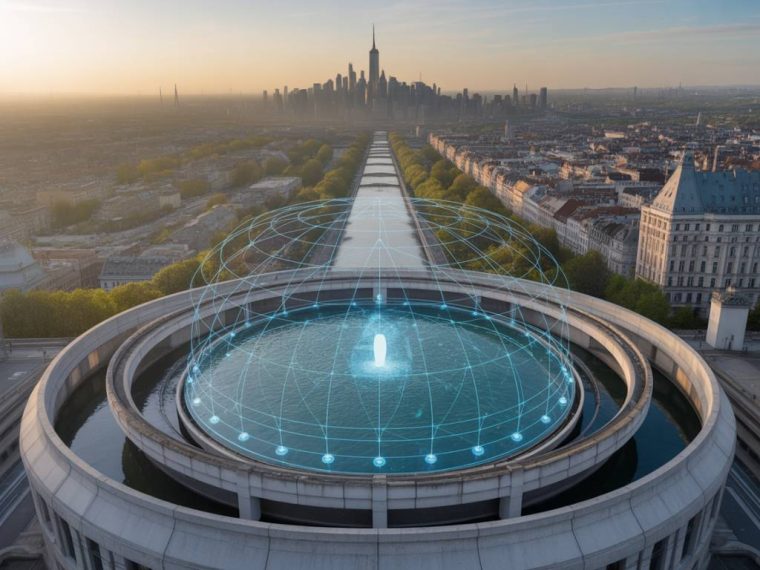
Understanding Digital Twins for Urban Water Systems
Digital twins for urban water systems are becoming a central topic in smart city strategies, utility optimization, and sustainable water management. A digital twin is a dynamic digital replica of a physical system. In the context of water, it mirrors the behavior of drinking water networks, wastewater systems, stormwater infrastructure, and even natural water bodies within a city.
By combining real-time sensor data, hydraulic and hydrological models, and advanced analytics, digital twins support better decisions. They help utilities simulate scenarios before they occur in the real world. The result is a powerful tool that links health, technology, and environmental sustainability in one integrated platform.
How Digital Twins Work in Urban Water Management
A digital twin for urban water management connects various layers of information into a single, coherent environment. Physical infrastructure, such as pipes, pumps, reservoirs, treatment plants, and sewers, is mapped in detail. Then, operational data is integrated to bring this virtual model to life.
Typically, a water digital twin relies on three pillars:
- Data acquisition: IoT sensors, smart meters, SCADA systems, satellite data, and legacy databases provide continuous information.
- Modeling and simulation: Hydraulic and water quality models simulate pressure, flow, contamination spread, and network performance.
- Analytics and visualization: AI, machine learning, and dashboards transform complex data into actionable insights for operators and planners.
These components allow utilities to test operational strategies virtually, evaluate infrastructure investments, and anticipate system failures before they affect residents and ecosystems.
Linking Digital Water Twins to Public Health
Urban water systems have a direct impact on public health. Safe drinking water, effective wastewater treatment, and robust stormwater management are fundamental to preventing disease outbreaks and protecting vulnerable populations. Digital twins add a new layer of protection by enabling proactive, risk-based water management.
For example, a digital twin of a drinking water network can simulate the spread of a contaminant. It can identify which areas are at risk and how quickly the problem might propagate through the system. This allows authorities to issue targeted alerts, adjust operations, and isolate sections of the network before health is compromised.
Digital twins can also support health-oriented water quality monitoring in near real time. By integrating sensor readings for parameters such as turbidity, residual chlorine, pH, or microbial indicators, operators can quickly detect anomalies. Advanced analytics correlate these anomalies with operational events, weather patterns, or infrastructure failures.
In wastewater systems, digital twins underpin new approaches such as wastewater-based epidemiology. By modeling flows and loads, utilities and health agencies can interpret viral or bacterial markers in sewage and link them to specific neighborhoods. This can provide early warning signals for infectious disease trends, supporting more targeted public health interventions.
Key Technologies Behind Digital Twins for Water Utilities
The rapid development of digital twins for urban water systems is driven by the convergence of multiple technologies. Each layer brings specific capabilities that, when combined, unlock new value.
- Internet of Things (IoT): Smart sensors and connected devices continuously measure pressure, flow, water levels, water quality, rainfall, and energy use in pumps and treatment plants.
- GIS and spatial data: Geographic Information Systems map every asset and its surroundings, enabling spatial analysis and visual navigation within the twin.
- Hydraulic and hydrological modeling software: Established tools simulate pipe networks, sewers, open channels, and catchments, forming the backbone of water system representation.
- Cloud platforms and edge computing: Scalable infrastructure processes large data streams and performs complex calculations, while edge devices handle critical tasks close to the assets.
- Artificial intelligence and machine learning: Algorithms detect patterns, forecast demand, predict leaks, optimize pumping schedules, and support anomaly detection in water quality data.
- Cybersecurity and data governance: Security frameworks protect critical water infrastructure data and ensure compliance with privacy and regulatory requirements.
Vendors are increasingly offering integrated “digital water” platforms that bundle many of these technologies. Utilities can also build custom environments by connecting specialized tools via APIs.
Digital Twins and Sustainable Urban Water Management
Sustainable water management in cities goes beyond operational efficiency. It involves balancing water supply and demand, supporting ecosystem health, reducing emissions, and building resilience to climate change. Digital twins provide a systems-level view that is essential for this transition.
Because they integrate drinking water, wastewater, and stormwater networks, digital twins can reveal interactions that are often overlooked. For instance, urban flooding may overload wastewater treatment plants, which in turn affects effluent quality and downstream ecosystems. A digital twin can simulate these interconnected effects under different rainfall scenarios, urban development plans, or mitigation strategies.
Digital twins support sustainability in several ways:
- Resource efficiency: By optimizing pump operations and storage, utilities can reduce energy consumption and carbon emissions.
- Leak detection and non-revenue water reduction: Predictive algorithms identify likely leak locations, supporting targeted field inspections and repairs.
- Green infrastructure planning: Integrating digital twins with urban planning tools helps assess the benefits of permeable pavements, rain gardens, or green roofs.
- Drought and flood resilience: Scenario simulations help cities design adaptation strategies and prioritize investments in infrastructure and nature-based solutions.
This combination of environmental, operational, and social perspectives makes digital twins a central component of sustainable and “water-wise” cities.
Practical Use Cases for Urban Water Digital Twins
Cities around the world are deploying digital twins to address concrete challenges. While each context is different, several recurring use cases illustrate the practical benefits.
- Real-time operational control: Digital twins mirror current network conditions, allowing operators to adjust valves, pumps, or treatment processes based on live data and model predictions.
- Asset management and investment planning: Data-driven insights support decisions about asset renewal, network expansion, and prioritization of capital projects.
- Incident response and emergency management: During contamination events, pipe bursts, or extreme storms, digital twins help simulate alternative responses and select the most effective operational strategy.
- Customer service and transparency: Some utilities use digital twins to communicate service levels, planned works, and risks to customers and stakeholders through web portals or mobile apps.
- Training and knowledge transfer: Virtual environments provide a safe space for new staff to learn network behavior, practice responding to incidents, and explore “what-if” situations.
As these use cases mature, many utilities move from pilot projects to enterprise-wide digital twin strategies that cover the full water cycle.
Challenges in Implementing Digital Twins for Water Systems
Despite their potential, digital twins are not a plug-and-play solution. Implementing a robust digital twin for an urban water system involves technical, organizational, and financial challenges.
- Data quality and availability: Many water utilities still struggle with incomplete asset registers, limited metering, and inconsistent data standards.
- Integration of legacy systems: SCADA platforms, modeling tools, and GIS databases may not be easily interoperable, requiring custom integration work.
- Skills and capacity: Building and maintaining a digital twin demands expertise in hydraulics, IT, data science, and cybersecurity, which can be difficult to secure.
- Cost and value justification: Investments in sensors, connectivity, and software licenses must be justified through measurable operational savings, risk reduction, and improved service levels.
- Change management: Staff must adapt to data-driven decision processes, new workflows, and sometimes a different organizational culture around technology.
Addressing these barriers typically requires a phased approach. Many utilities start small, focusing on a specific zone or use case, then expand as they demonstrate value and build internal capabilities.
Digital Water Products and Solutions for Utilities and Cities
The market for digital twins in water is expanding rapidly. Technology providers offer a range of solutions, from specialized modeling software to cloud-based platforms that integrate asset management, analytics, and visualization. For utilities or municipalities exploring investments, it is useful to categorize digital water products by their primary function.
- Monitoring and sensing solutions: Smart meters, pressure loggers, level sensors, and multi-parameter water quality probes that feed data into digital twins.
- Modeling and simulation tools: Hydraulic and hydrological software packages used to represent networks and catchments in detail.
- Integrated digital twin platforms: End-to-end solutions that unify data, models, and analytics in a single interface, often cloud-based.
- Analytics and AI services: Specialized offerings focused on leak detection, demand forecasting, or predictive maintenance, which can plug into broader twins.
- Visualization and decision-support dashboards: User interfaces tailored for operators, managers, or decision-makers, enabling intuitive exploration of complex scenarios.
When selecting technologies, utilities should prioritize open standards, interoperability, and clear pathways for scaling from pilot projects to full network coverage.
Future Directions: Digital Twins, Health, and Resilient Cities
The future of digital twins for urban water systems lies in deeper integration across sectors. Water does not exist in isolation. It is connected to energy, mobility, housing, and public health. Emerging projects are exploring “city-scale” digital twins that link water systems with transportation networks, power grids, and healthcare data.
For public health, this means more timely and targeted interventions. For technology providers, it demands solutions that are both robust and flexible. For city planners, it enables long-term strategies that incorporate climate projections, demographic shifts, and evolving regulatory frameworks.
Urban water digital twins will increasingly use advanced AI to generate predictions, suggest optimal actions, and even automate certain decisions under strict supervision. At the same time, ethical considerations such as data privacy, algorithmic transparency, and equitable access to water services will gain prominence.
As cities seek to align health, technology, and sustainable water management, digital twins are poised to become a core component of resilient and inclusive urban infrastructure strategies. Utilities, policymakers, and solution providers that invest now in interoperable, well-governed digital twin ecosystems will be better prepared for the complex water challenges ahead.